NAD+ IV Therapy
NAD+ (nicotinamide adenine dinucleotide) is a coenzyme essential for cellular energy production, DNA repair and healthy aging. IV administration delivers NAD+ directly to your cells for optimal absorption.
Cellular Energy
NAD+ is essential for mitochondrial function and ATP production. Research shows NAD+ levels decline with age, contributing to fatigue and reduced cellular function.1-5
Mental Clarity
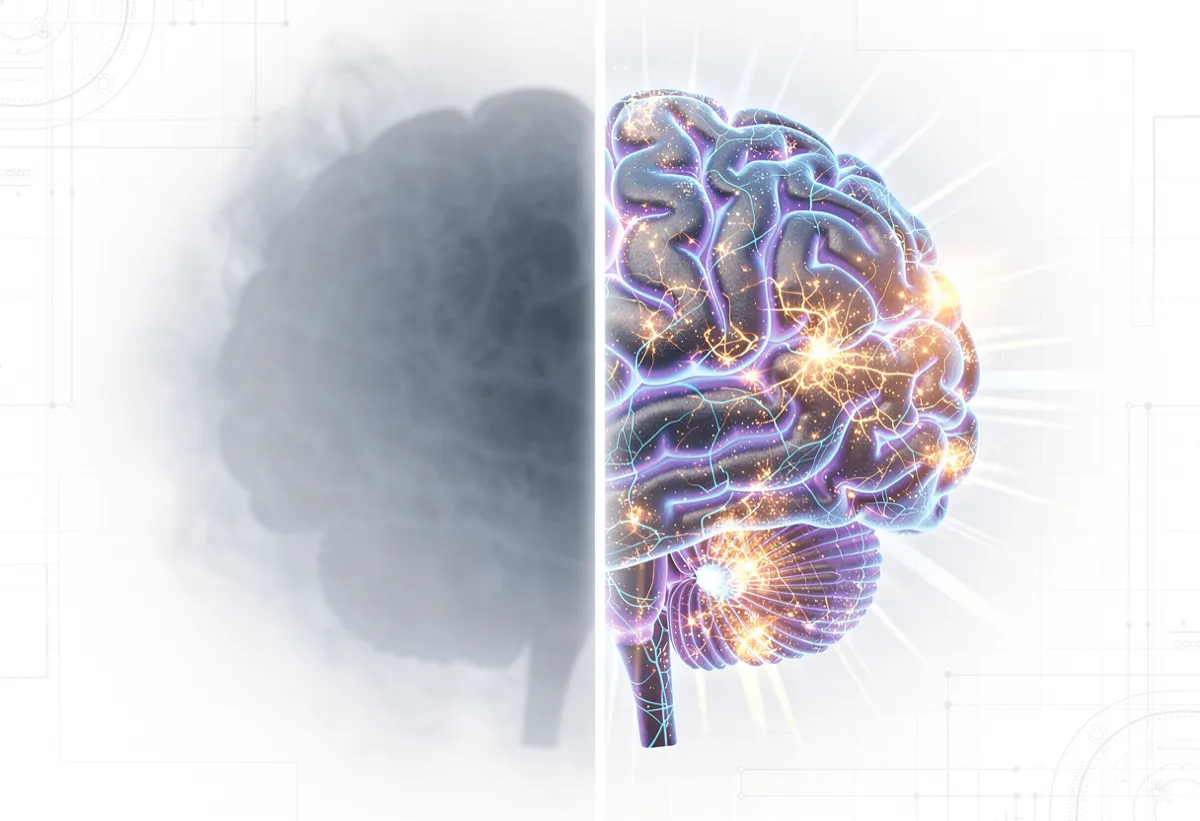
NAD+ supports neuronal health and neurotransmitter synthesis. Studies demonstrate improvements in cognitive function and mental clarity with NAD+ supplementation.6-10
Healthy Aging
NAD+ activates sirtuins, the "longevity genes" that regulate cellular repair, metabolism and stress resistance. Declining NAD+ is a hallmark of aging.11-15
What is NAD+?
NAD+ (nicotinamide adenine dinucleotide) is a coenzyme found in every cell of your body. It plays a critical role in hundreds of metabolic processes, including energy production, DNA repair and cellular signaling.
As we age, NAD+ levels naturally decline - by age 50, most people have approximately half the NAD+ they had in their youth.16 This decline is associated with many age-related conditions including fatigue, cognitive decline and metabolic dysfunction.
IV administration of NAD+ bypasses the digestive system, delivering this essential coenzyme directly into your bloodstream for optimal cellular absorption and utilization.

Who Benefits From NAD+ Therapy?
NAD+ therapy may help individuals experiencing the following conditions
Energy & Fatigue
Cognitive & Neurological
Metabolic & Aging
Recovery & Wellness
Addiction recovery and alcohol withdrawal require medical evaluation and supervision. NAD+ therapy is used as a supportive treatment alongside appropriate medical care, not as a standalone intervention.
How Does NAD+ Work?
NAD+ functions as a critical coenzyme in cellular metabolism, shuttling electrons between molecules during energy production in the mitochondria. Without adequate NAD+, your cells cannot efficiently convert nutrients into usable energy (ATP).17-19
Beyond energy production, NAD+ is essential for activating sirtuins - a family of proteins that regulate cellular health, DNA repair and longevity pathways. Research has identified seven sirtuin proteins (SIRT1-7), each dependent on NAD+ for their function.20-22
NAD+ also serves as a substrate for enzymes called PARPs (poly ADP-ribose polymerases), which are critical for DNA repair. When DNA damage occurs, PARPs consume NAD+ to facilitate repair, which is why maintaining adequate NAD+ levels is essential for genomic stability.23-25
Why IV Administration?
While oral NAD+ precursors like NMN (nicotinamide mononucleotide) and NR (nicotinamide riboside) are available as supplements, IV administration offers distinct advantages for therapeutic applications.
Intravenous delivery bypasses the digestive system entirely, avoiding the breakdown of NAD+ by digestive enzymes and ensuring 100% bioavailability. This allows for therapeutic concentrations that cannot be achieved through oral supplementation.
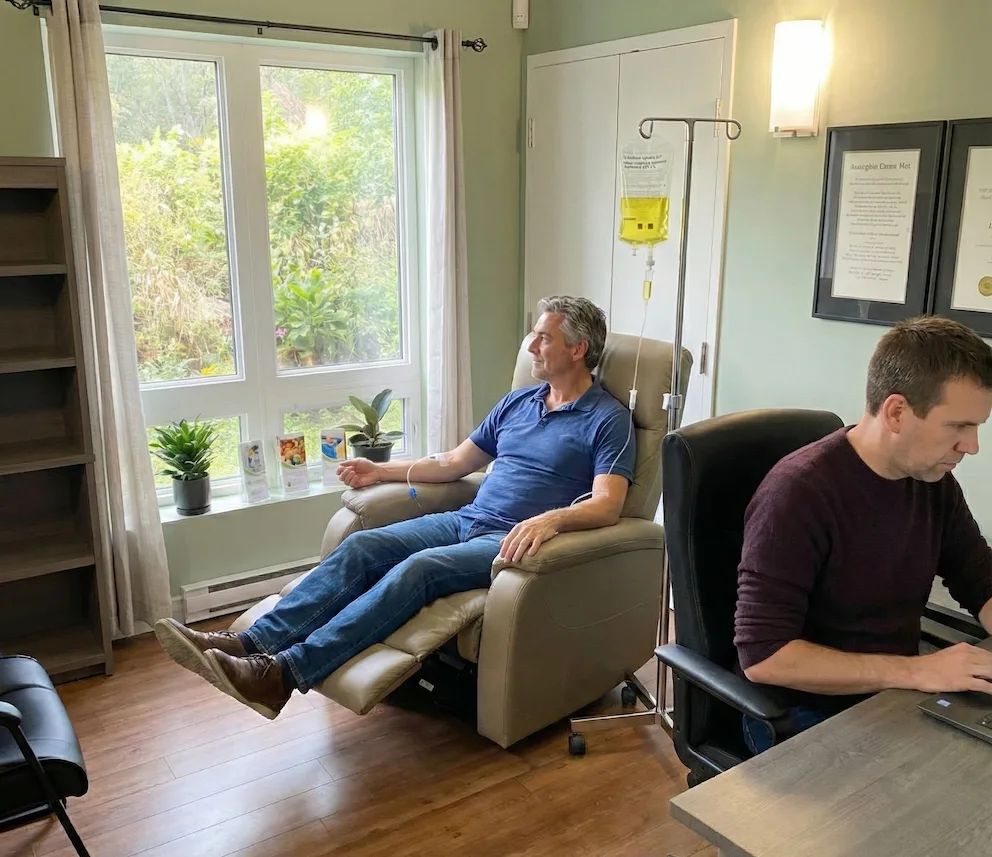
NAD+ infusions are typically administered over 2-4 hours, allowing your body to gradually absorb and utilize the coenzyme. This controlled delivery minimizes potential side effects and optimizes cellular uptake.
NAD+ IV Therapy
Cellular energy and regeneration support
- Pure NAD+ coenzyme
- 100% bioavailability
- Comfortable 2-3 hour session
- Professional monitoring
Getting Started with NAD+ Therapy
To ensure that NAD+ therapy is appropriate for you, an initial naturopathic consultation is required. This allows us to review your health history, discuss your goals and create a personalized treatment plan.
Book OnlineThe Science Behind NAD+
Research into NAD+ has expanded dramatically since Dr. David Sinclair and other longevity researchers highlighted its role in aging. Key findings include:
- Age-related decline: NAD+ levels decrease by approximately 50% between ages 40 and 60, correlating with mitochondrial dysfunction and metabolic decline.16
- Sirtuin activation: NAD+ is required for all seven sirtuin proteins, which regulate metabolism, inflammation, DNA repair and stress resistance.20-22
- Mitochondrial function: NAD+ is essential for the electron transport chain and ATP production. Restoring NAD+ levels has been shown to improve mitochondrial function in animal studies.26-28
- Neuroprotection: NAD+ supports neuronal health and has shown promise in preclinical studies for neurodegenerative conditions.6-10
- Addiction recovery: NAD+ therapy has been used clinically for addiction recovery since the 1960s, with practitioners reporting reduced cravings and withdrawal symptoms.29-31
While much of the research is preclinical or observational, the growing body of evidence supports NAD+ as a promising intervention for cellular health and healthy aging.
What to Expect
Before Your Infusion
Eat a light meal and stay well hydrated. Avoid caffeine and alcohol for 24 hours prior. Wear comfortable clothing with easy arm access.
During Your Infusion
Sessions last 2-4 hours depending on dose. You may experience mild chest tightness, nausea or warmth - these are normal and manageable by adjusting the drip rate.
After Your Infusion
Most people feel increased energy and mental clarity within hours to days. Optimal results are typically seen after a series of 4 infusions over 2-4 weeks.
Safety of NAD+ Therapy
NAD+ IV therapy has been used clinically for decades with a strong safety profile. NAD+ is a naturally occurring molecule in your body, and IV supplementation simply provides additional amounts to support cellular function.
The most common side effects are related to the infusion rate rather than NAD+ itself. These may include mild chest tightness, abdominal discomfort or a feeling of warmth. These sensations typically resolve quickly when the infusion rate is slowed.
NAD+ therapy may not be appropriate for individuals who are pregnant, breastfeeding, or have active cardiac conditions, active cancer or other significant medical conditions. A thorough health assessment is completed before treatment to ensure safety.
Frequently Asked Questions
How long does an NAD+ infusion take?
NAD+ infusions typically take 1-4 hours depending on the dose and your individual tolerance. The infusion rate is adjusted to ensure comfort throughout the session. We recommend bringing something to read or watch during your treatment.
How many treatments will I need?
Most people benefit from an initial series of 3 infusions spread over 3-6 weeks. Following this loading phase, maintenance infusions every 4-8 weeks help sustain benefits. Your treatment plan will be personalized based on your health goals and response to therapy.
What does NAD+ therapy feel like?
During the infusion, you may feel mild warmth, slight chest tightness or a fluttering sensation. These are normal responses to NAD+ and resolve by slowing the infusion rate. After treatment, many people report feeling more alert, energized and mentally clear.
Is NAD+ therapy different from taking NAD+ supplements?
Yes. Oral NAD+ supplements and precursors (like NMN or NR) must be absorbed through the digestive system, which reduces bioavailability. IV administration delivers NAD+ directly to your bloodstream, achieving therapeutic levels that are not possible with oral supplementation.
Who should not receive NAD+ therapy?
NAD+ therapy may not be appropriate for pregnant or breastfeeding women, individuals with active cancer or those with certain cardiac conditions. A comprehensive health assessment is completed before treatment to ensure safety.
References
- Yoshino J, Baur JA, Imai SI. NAD+ Intermediates: The Biology and Therapeutic Potential of NMN and NR. Cell Metab. 2018;27(3):513-528.
- Cantó C, Menzies KJ, Auwerx J. NAD(+) Metabolism and the Control of Energy Homeostasis: A Balancing Act between Mitochondria and the Nucleus. Cell Metab. 2015;22(1):31-53.
- Verdin E. NAD+ in aging, metabolism and neurodegeneration. Science. 2015;350(6265):1208-1213.
- Fang EF, Lautrup S, Hou Y, et al. NAD+ in Aging: Molecular Mechanisms and Translational Implications. Trends Mol Med. 2017;23(10):899-916.
- Rajman L, Chwalek K, Sinclair DA. Therapeutic Potential of NAD-Boosting Molecules: The In Vivo Evidence. Cell Metab. 2018;27(3):529-547.
- Lautrup S, Sinclair DA, Mattson MP, Fang EF. NAD+ in Brain Aging and Neurodegenerative Disorders. Cell Metab. 2019;30(4):630-655.
- Hou Y, Lautrup S, Cordonnier S, et al. NAD+ supplementation normalizes key Alzheimer's features and DNA damage responses in a new AD mouse model with introduced DNA repair deficiency. Proc Natl Acad Sci U S A. 2018;115(8):E1876-E1885.
- Gong B, Pan Y, Vempati P, et al. Nicotinamide riboside restores cognition through an upregulation of proliferator-activated receptor-γ coactivator 1α regulated β-secretase 1 degradation and mitochondrial gene expression in Alzheimer's mouse models. Neurobiol Aging. 2013;34(6):1581-1588.
- Wang X, Hu X, Yang Y, Takata T, Bhattacharyya R. Nicotinamide mononucleotide protects against β-amyloid oligomer-induced cognitive impairment and neuronal death. Brain Res. 2016;1643:1-9.
- Braidy N, Guillemin GJ, Mansour H, Chan-Ling T, Poljak A, Grant R. Age related changes in NAD+ metabolism oxidative stress and Sirt1 activity in wistar rats. PLoS One. 2011;6(4):e19194.
- Imai S, Guarente L. NAD+ and sirtuins in aging and disease. Trends Cell Biol. 2014;24(8):464-471.
- Bonkowski MS, Sinclair DA. Slowing ageing by design: the rise of NAD+ and sirtuin-activating compounds. Nat Rev Mol Cell Biol. 2016;17(11):679-690.
- Sinclair DA, Guarente L. Extrachromosomal rDNA circles--a cause of aging in yeast. Cell. 1997;91(7):1033-1042.
- Haigis MC, Sinclair DA. Mammalian sirtuins: biological insights and disease relevance. Annu Rev Pathol. 2010;5:253-295.
- Guarente L. Sirtuins, aging and medicine. N Engl J Med. 2011;364(23):2235-2244.
- Massudi H, Grant R, Braidy N, et al. Age-associated changes in oxidative stress and NAD+ metabolism in human tissue. PLoS One. 2012;7(7):e42357.
- Mouchiroud L, Houtkooper RH, Moullan N, et al. The NAD(+)/Sirtuin Pathway Modulates Longevity through Activation of Mitochondrial UPR and FOXO Signaling. Cell. 2013;154(2):430-441.
- Gomes AP, Price NL, Ling AJ, et al. Declining NAD(+) induces a pseudohypoxic state disrupting nuclear-mitochondrial communication during aging. Cell. 2013;155(7):1624-1638.
- Frederick DW, Loro E, Liu L, et al. Loss of NAD Homeostasis Leads to Progressive and Reversible Degeneration of Skeletal Muscle. Cell Metab. 2016;24(2):269-282.
- Guarente L. Sirtuins in aging and disease. Cold Spring Harb Symp Quant Biol. 2007;72:483-488.
- Satoh A, Stein L, Imai S. The role of mammalian sirtuins in the regulation of metabolism, aging and longevity. Handb Exp Pharmacol. 2011;206:125-162.
- Houtkooper RH, Pirinen E, Auwerx J. Sirtuins as regulators of metabolism and healthspan. Nat Rev Mol Cell Biol. 2012;13(4):225-238.
- Fang EF, Scheibye-Knudsen M, Brace LE, et al. Defective mitophagy in XPA via PARP-1 hyperactivation and NAD(+)/SIRT1 reduction. Cell. 2014;157(4):882-896.
- Bai P, Cantó C, Oudart H, et al. PARP-1 inhibition increases mitochondrial metabolism through SIRT1 activation. Cell Metab. 2011;13(4):461-468.
- Pirinen E, Cantó C, Jo YS, et al. Pharmacological Inhibition of poly(ADP-ribose) polymerases improves fitness and mitochondrial function in skeletal muscle. Cell Metab. 2014;19(6):1034-1041.
- Mills KF, Yoshida S, Stein LR, et al. Long-Term Administration of Nicotinamide Mononucleotide Mitigates Age-Associated Physiological Decline in Mice. Cell Metab. 2016;24(6):795-806.
- Zhang H, Ryu D, Wu Y, et al. NAD+ repletion improves mitochondrial and stem cell function and enhances life span in mice. Science. 2016;352(6292):1436-1443.
- Yoshino J, Mills KF, Yoon MJ, Imai S. Nicotinamide mononucleotide, a key NAD(+) intermediate, treats the pathophysiology of diet- and age-induced diabetes in mice. Cell Metab. 2011;14(4):528-536.
- O'Hollaren P. Diphosphopyridine nucleotide in the prevention, diagnosis and treatment of drug addiction. West J Surg Obstet Gynecol. 1961;69:213-215.
- Mestayer PN. Addiction: The Dark Night of the Soul/NAD+: The Light of Hope. 2019. Balboa Press.
- Grant R, Whittaker M. Nicotinamide Adenine Dinucleotide (NAD) Therapy in Substance Use Disorder. J Reward Defic Syndr Addict Sci. 2021;7(1):1-5.
Ready to Experience NAD+ Therapy?
Schedule a consultation to discuss whether NAD+ IV therapy is right for your health goals.
Book Online