Post-Viral Recovery: How IV Therapy Supports Healing After COVID, Flu and Other Infections
Struggling to recover after COVID or other viral infections? Learn how IV nutrient therapy, including Myers' Cocktail and IV Vitamin C, can support post-viral recovery and address lingering fatigue.

On This Page
The infection is over, but you still don’t feel right. Weeks or months after a viral illness, you’re exhausted, foggy and nothing like your pre-illness self. If this sounds familiar, you’re experiencing post-viral syndrome, a frustrating condition that affects millions following COVID-19, influenza, Epstein-Barr virus and other infections.
Post-viral syndrome occurs when symptoms persist after the acute infection has resolved. Recovery patterns vary, and persistent or worsening symptoms warrant appropriate medical assessment. Nutritional support and intravenous therapy are sometimes discussed in this setting, but evidence for IV therapy as a post-viral treatment remains limited and it should not replace established evaluation or care.
Understanding Post-Viral Syndrome
The hallmark of post-viral syndrome is fatigue that doesn’t improve with rest. This isn’t ordinary tiredness. It’s a profound exhaustion that sleep doesn’t fix, often accompanied by what patients describe as “brain fog”: difficulty concentrating, memory lapses, trouble finding words and a general sense that thinking requires more effort than it should.1
Physical symptoms frequently include muscle weakness and aches, sleep disturbances despite exhaustion and exercise intolerance where even mild activity triggers disproportionate fatigue. Many patients also experience autonomic dysfunction. The nervous system’s automatic functions become dysregulated, causing heart palpitations, dizziness upon standing, temperature sensitivity and digestive changes.2
While Long COVID has brought widespread attention to post-viral illness, the phenomenon is far from new. Epstein-Barr virus (the cause of mononucleosis) has long been recognized as a trigger for prolonged fatigue syndromes. Influenza can leave people debilitated for months. Various respiratory viruses, enteroviruses and other infections have all been documented to cause similar post-infectious states.3
The percentage of people who develop prolonged symptoms varies by pathogen and individual factors, but estimates suggest that 10-30% of COVID-19 infections result in symptoms lasting beyond the acute illness.1 For many, these symptoms resolve within weeks to months. For others, recovery stalls, leaving them trapped in a state of persistent dysfunction.
Why Recovery Stalls
Several interconnected factors explain why some people struggle to recover after viral infections. Understanding these mechanisms helps clarify why nutritional support, and particularly intravenous delivery, can be so valuable.
Mitochondria, the energy-producing structures within every cell, take a significant hit during viral infections. Research demonstrates that viruses can directly damage mitochondrial function, trigger oxidative stress that impairs energy production and create persistent inflammation affecting cellular metabolism.4 When mitochondria don’t function optimally, fatigue is inevitable regardless of how much rest you get. The cells simply cannot produce adequate energy to support normal function.
Fighting an infection is also metabolically expensive. The immune response burns through nutrients at an accelerated rate. Vitamin C is consumed rapidly during immune activation. B vitamins, essential cofactors for energy production and nervous system function, become depleted. Magnesium, already deficient in many people’s diets, is further depleted by stress and inflammation. Zinc, critical for immune function and tissue repair, may be insufficient for recovery needs. Glutathione, the body’s master antioxidant, becomes depleted fighting the oxidative stress generated by inflammation.5
Even with a good diet, replenishing these stores through food alone can take months, longer if digestive function has been compromised by the illness itself.
For some individuals, the inflammatory response triggered by infection doesn’t fully resolve even after the pathogen is cleared. This low-grade, smoldering inflammation continues to affect brain function (contributing to cognitive symptoms and mood changes), energy metabolism, nervous system regulation and tissue repair processes.6 The immune system remains in a partially activated state, consuming resources and generating ongoing oxidative stress without the benefit of actually fighting an active threat.
How IV Therapy Supports Recovery
When the body is depleted and struggling to recover, oral supplements have significant limitations. Gastrointestinal absorption is often compromised. Gut inflammation and dysfunction, common after viral illness, reduce nutrient uptake. Many nutrients cause digestive upset at the doses needed for therapeutic effect. And building depleted stores through oral supplementation is a slow process, typically requiring months of consistent intake.7
Intravenous therapy bypasses these limitations entirely. Nutrients delivered directly to the bloodstream achieve 100% bioavailability immediately, reaching cells at concentrations impossible to achieve through oral routes. This allows for rapid restoration of depleted stores and therapeutic effects that oral supplementation simply cannot match.
The Myers’ Cocktail, a foundational intravenous formula containing magnesium, B vitamins, vitamin C and calcium, addresses multiple aspects of post-viral recovery simultaneously.8 Magnesium supports over 300 enzymatic reactions including those essential for energy production. It helps calm an overactive nervous system and reduces the muscle tension and cramping common in post-viral states. B vitamins serve as essential cofactors for mitochondrial energy production, support nervous system repair and aid neurotransmitter production affecting mood and cognitive function. Vitamin C provides powerful antioxidant protection against ongoing oxidative stress, supports adrenal function for stress resilience and aids tissue repair processes.
For more intensive recovery support, high-dose intravenous vitamin C offers additional benefits. At intravenous doses, vitamin C achieves blood levels 50-70 times higher than what oral supplementation can produce.9 These pharmacological concentrations provide potent antioxidant activity, neutralizing the oxidative stress that perpetuates post-viral dysfunction. Vitamin C is also required for carnitine synthesis, essential for converting fat to energy and supports the adrenal hormone production needed for appropriate stress response.
Research on intravenous nutrient therapy has demonstrated benefits for chronic fatigue syndrome, which shares many features with post-viral syndrome, as well as fibromyalgia and acute viral infections themselves.8,10 While large-scale trials specifically in post-viral recovery are still emerging, the physiological rationale is sound and clinical experience supports the approach.
A Comprehensive Recovery Approach
IV therapy is most effective as part of a broader recovery strategy rather than a standalone intervention. The most important element of post-viral recovery is learning to work within your current energy envelope, a practice sometimes called “pacing.” Identifying your energy envelope (the activity level you can sustain without triggering crashes), planning rest before and after activities and avoiding the push-crash cycles that set recovery back are essential skills.11
Sleep optimization matters tremendously because quality sleep is when repair happens. Maintaining consistent sleep and wake times, addressing any sleep disorders that may have developed and creating an optimal sleep environment all support the restorative processes that occur during rest.
Nutritional foundation between IV treatments is equally important. An anti-inflammatory dietary pattern, rich in fatty fish, colorful vegetables and fruits, olive oil and foods containing natural anti-inflammatory compounds, supports the resolution of ongoing inflammation. Adequate protein intake provides the building blocks for tissue repair. Processed foods, refined sugars and excessive omega-6 fatty acids can perpetuate inflammatory states and should be minimized.
Stress management deserves particular attention because chronic stress impedes recovery at multiple levels. Nervous system calming practices, breathing exercises, gentle movement when tolerated and maintaining social connection all support the parasympathetic state needed for healing.
Targeted oral supplementation between IV treatments, including B-complex vitamins, vitamin D (especially important in Nova Scotia’s climate), omega-3 fatty acids and adaptogenic herbs for stress resilience, maintains progress between infusions.
Treatment Protocol
For significant post-viral depletion, treatment typically begins with weekly Myers’ Cocktail infusions for four weeks. Some patients benefit from adding high-dose vitamin C (15-25g) on alternating weeks. Lab testing at this stage helps identify specific deficiencies that may require additional attention.
As energy improves during the restoration phase, infusion frequency typically decreases to every two weeks. Treatment continues to address any identified deficiencies while carefully, gradually increasing activity levels based on tolerance. Ongoing symptom monitoring guides adjustments to the protocol.
Once stable, many patients find that monthly IV support maintains their gains while focusing on sustainable lifestyle factors and oral supplementation for ongoing support. The goal is to restore function to the point where intensive support is no longer needed, though some find periodic maintenance infusions helpful during high-stress periods or seasonal challenges.
What to Expect
During an initial consultation, we conduct a thorough assessment including detailed history of your illness and recovery, current symptoms and their impact on daily life, previous treatments attempted and review of any existing lab work. We discuss whether IV therapy is appropriate for your situation and what realistic expectations look like.
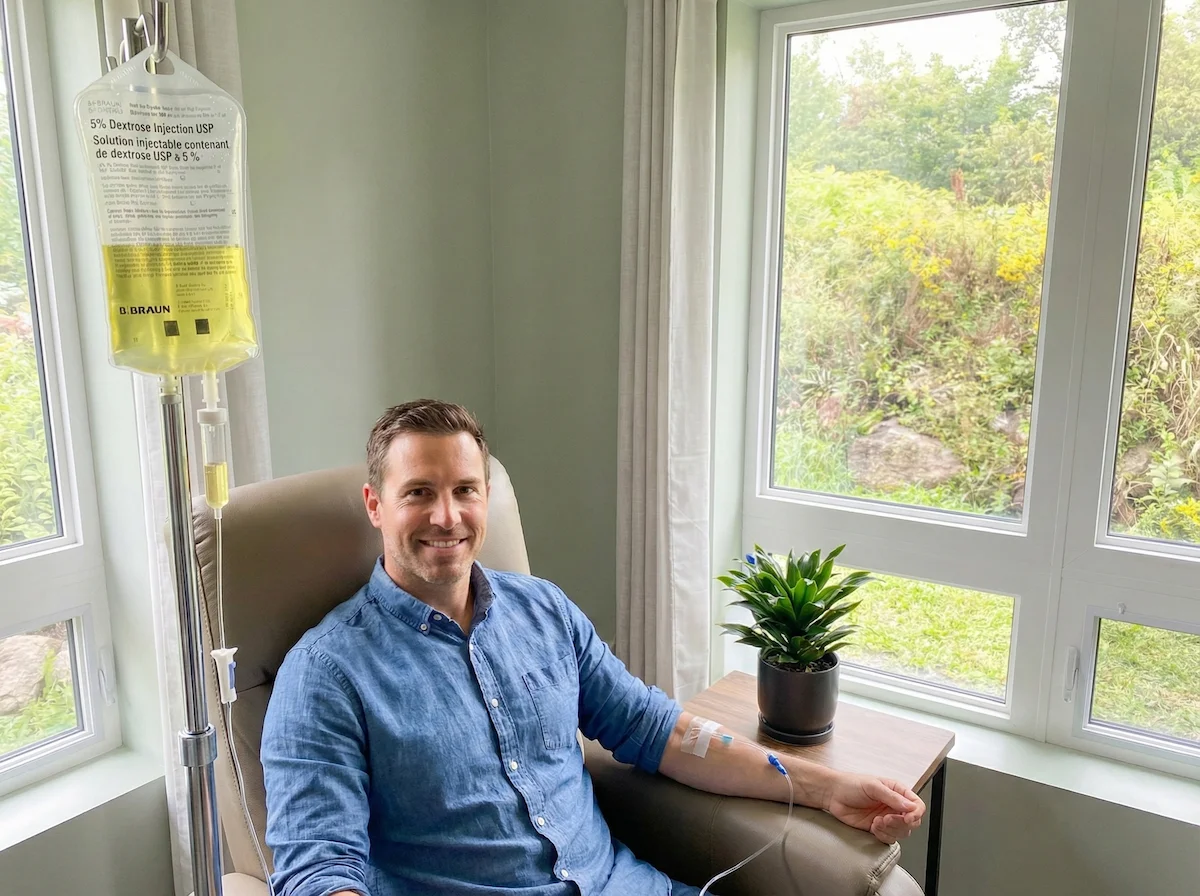
The infusions themselves take 30-60 minutes depending on the specific protocol. You’ll relax in a comfortable chair. Many patients read, listen to podcasts or simply rest. Most people feel relaxed during the infusion, with some noticing improved energy the same day while for others the effects are more gradual. Cumulative benefits typically build over a series of treatments.
After treatment, most people resume normal activities immediately. Staying well-hydrated supports the body’s use of the infused nutrients. Some experience improved energy within 24-48 hours; others notice changes more gradually over subsequent days and weeks.
Realistic Expectations
Post-viral recovery takes time, and IV therapy supports rather than replaces the healing process. Intravenous nutrients can rapidly restore depleted stores, support mitochondrial function and energy production, reduce oxidative stress and provide the raw materials needed for repair. What they cannot do is provide an instant cure, replace the need for pacing and rest or work as a one-time fix when the underlying depletion is significant.
Recovery timelines vary considerably. Some people notice meaningful improvement after one or two treatments. Others require a longer series before benefits become apparent. Patience and consistent support yield the best results. The trajectory is rarely linear. Good days and harder days are both normal parts of the process.
Is IV Therapy Right for You?
Consider IV therapy for post-viral recovery if symptoms have persisted beyond four to six weeks after infection, if fatigue significantly impacts your daily function, if oral supplements haven’t provided adequate improvement, if brain fog or cognitive symptoms are prominent or if you’ve been told there’s nothing that can be done and are looking for additional options.
IV therapy may not be appropriate for those with certain kidney conditions, G6PD deficiency (for high-dose vitamin C), certain heart conditions or during pregnancy for some formulations. We discuss your individual situation during consultation to determine whether the approach is suitable.
Taking the First Step
If you’re struggling to recover from a viral infection, you don’t have to simply wait and hope things improve on their own. Targeted nutritional support can help your body complete the healing process that has stalled. A consultation allows us to review your history and current symptoms, discuss treatment options and realistic expectations, order helpful lab work if indicated and create a personalized recovery plan that addresses your specific situation.
Related Resources
References
-
Davis HE, McCorkell L, Vogel JM, Topol EJ. Long COVID: major findings, mechanisms and recommendations. Nat Rev Microbiol. 2023;21(3):133-146.
-
Komaroff AL, Lipkin WI. Insights from myalgic encephalomyelitis/chronic fatigue syndrome may help unravel the pathogenesis of postacute COVID-19 syndrome. Trends Mol Med. 2021;27(9):895-906.
-
Hickie I, Davenport T, Wakefield D, et al. Post-infective and chronic fatigue syndromes precipitated by viral and non-viral pathogens: prospective cohort study. BMJ. 2006;333(7568):575.
-
Wood E, Hall KH, Tate W. Role of mitochondria, oxidative stress and the response to antioxidants in myalgic encephalomyelitis/chronic fatigue syndrome: A possible approach to SARS-CoV-2 ‘long-haulers’? Chronic Dis Transl Med. 2021;7(1):14-26.
-
Carr AC, Maggini S. Vitamin C and Immune Function. Nutrients. 2017;9(11):1211.
-
Phetsouphanh C, Darley DR, Wilson DB, et al. Immunological dysfunction persists for 8 months following initial mild-to-moderate SARS-CoV-2 infection. Nat Immunol. 2022;23(2):210-216.
-
van Wijck K, Lenaerts K, van Loon LJ, Peters WH, Buurman WA, Dejong CH. Exercise-induced splanchnic hypoperfusion results in gut dysfunction in healthy men. PLoS One. 2011;6(7):e22366.
-
Gaby AR. Intravenous nutrient therapy: the “Myers’ cocktail.” Altern Med Rev. 2002;7(5):389-403.
-
Padayatty SJ, Sun H, Wang Y, et al. Vitamin C pharmacokinetics: implications for oral and intravenous use. Ann Intern Med. 2004;140(7):533-537.
-
Ali A, Njike VY, Northrup V, et al. Intravenous micronutrient therapy (Myers’ Cocktail) for fibromyalgia: a placebo-controlled pilot study. J Altern Complement Med. 2009;15(3):247-257.
-
Bateman L, Bested AC, Bonilla HF, et al. Myalgic Encephalomyelitis/Chronic Fatigue Syndrome: Essentials of Diagnosis and Management. Mayo Clin Proc. 2021;96(11):2861-2878.