Fiber: The Boring Nutrient That Actually Works
While social media promotes miracle supplements and detox cleanses, fiber remains the most underconsumed and underappreciated nutrient. Here's why it deserves your attention.

On This Page
The Most Underrated Nutrient
In a world of trending supplements, biohacking protocols and “miracle” ingredients, fiber doesn’t get much attention. It isn’t flashy. It doesn’t promise rapid weight loss or detox miracles. It’s slow, boring and incredibly effective, which doesn’t sell well in a culture obsessed with instant results.
Here’s the uncomfortable truth: 95% of people don’t consume enough fiber1. While we chase the latest superfood or supplement stack, we’re ignoring one of the most well-researched, affordable and impactful things we could add to our diet.
What Is Fiber?
Fiber is the indigestible part of plant foods. Unlike other nutrients, it passes through your digestive system relatively intact. This might seem useless, but it’s precisely this property that makes fiber so beneficial.
Fiber comes in several forms. Soluble fiber dissolves in water and forms a gel, and is found in oats, beans, apples and citrus fruits. It helps lower cholesterol and stabilize blood sugar. Insoluble fiber doesn’t dissolve in water but adds bulk to stool. Found in whole grains, vegetables and nuts, it promotes regularity and prevents constipation. Resistant starch resists digestion in the small intestine and is found in cooled potatoes, green bananas and legumes. It feeds beneficial gut bacteria. Prebiotic fiber specifically feeds gut bacteria and is found in garlic, onions, leeks and asparagus. It supports microbiome diversity.
Most whole plant foods contain a mix of fiber types, which is why eating a variety of plants is more effective than taking a single fiber supplement.
The Fiber Gap: How We Got Here
Our ancestors consumed far more fiber daily from wild plants, roots and seeds than we do today. The average modern Canadian or American manages far less than the recommended amount2.
The fiber gap reflects our shift away from whole foods toward processed foods, which typically have fiber removed during manufacturing.
What Fiber Does for Your Gut Microbiome
Your gut contains trillions of bacteria collectively known as the microbiome. These bacteria need to eat, and their preferred food is fiber.
When you eat fiber, gut bacteria ferment it into short-chain fatty acids (SCFAs) like butyrate, propionate and acetate. These compounds nourish the cells lining your intestines, reduce inflammation throughout the body, strengthen the gut barrier (preventing “leaky gut”), communicate with your immune system and may even affect brain function via the gut-brain axis.
Low-fiber diets starve your microbiome. Research shows that individuals consuming low-fiber diets have reduced microbial diversity and tend to harbor bacteria that thrive on protein and fat instead, which produce less beneficial metabolites and more inflammatory compounds3.
A 2024 study found that short-term fiber interventions produce consistent, positive gut microbiome responses across different studies, suggesting that increasing fiber reliably improves gut bacterial composition4.
Fiber and Disease Prevention
The health benefits of adequate fiber intake are remarkably well-documented.
Cardiovascular Disease
Fiber, particularly soluble fiber, helps lower LDL (“bad”) cholesterol by binding to bile acids in the intestine. Research has found that higher fiber intake is associated with significant reductions in cardiovascular disease risk5.
Type 2 Diabetes
Fiber slows the absorption of sugar, preventing blood glucose spikes after meals. Higher fiber intake is consistently associated with reduced diabetes risk and better blood sugar control in those who have diabetes.
Cancer
The evidence is strongest for colorectal cancer, where fiber appears protective through multiple mechanisms including faster transit time (less contact between potential carcinogens and intestinal lining), dilution of harmful substances, production of beneficial short-chain fatty acids and changes to gut bacteria.
A comprehensive 2024 review found fiber’s cancer protection extends beyond colorectal cancer to include reduced risks of breast, endometrial and esophageal cancers6.
Weight Management
Fiber promotes satiety (feeling full) without adding calories. High-fiber foods take longer to chew, slowing eating. They expand in the stomach, creating fullness and delay gastric emptying, prolonging satisfaction. They also generally have lower calorie density than refined alternatives.
Inflammation
A 2025 analysis found high-fiber diets consistently reduce key inflammatory markers including C-reactive protein (CRP), interleukin-6 and tumor necrosis factor-alpha7. Chronic low-grade inflammation underlies many diseases of aging.
Practical Ways to Increase Fiber
The goal isn’t to obsess over numbers. It’s to eat more whole plant foods.
Start Gradually
If you currently eat little fiber, increasing too quickly can cause bloating, gas and discomfort. Your gut bacteria need time to adapt. Increase fiber over several weeks while drinking adequate water.
Focus on Whole Foods
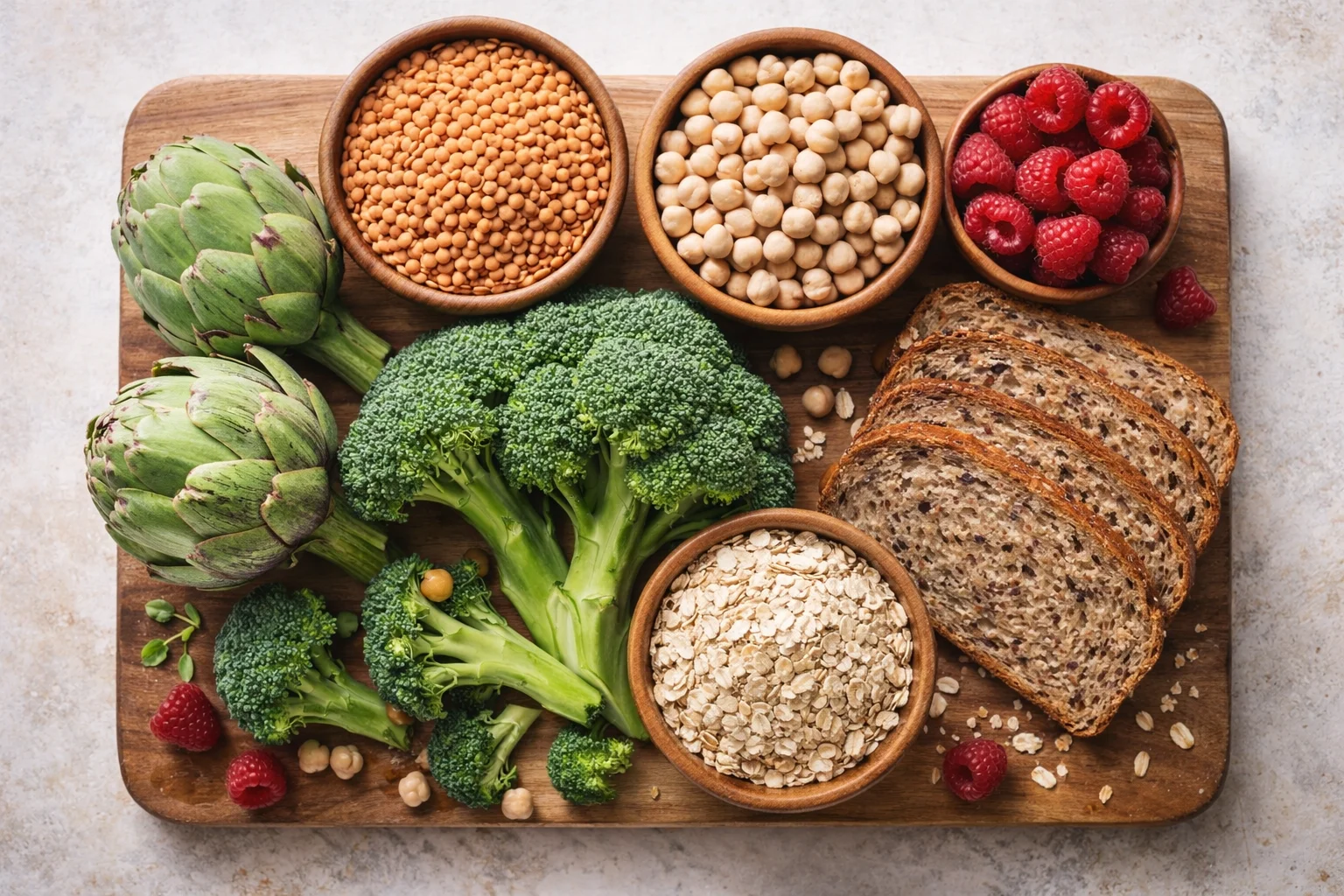
Legumes are among the highest-fiber foods, including lentils, black beans and chickpeas. Whole grains such as oats, barley, quinoa and bulgur provide substantial fiber. Vegetables like broccoli, Brussels sprouts, artichokes and peas are excellent sources. Fruits such as raspberries, pears and apples with skin contribute meaningful amounts. Nuts and seeds including almonds, chia seeds and flaxseeds add fiber to meals. Potatoes with skin, especially when cooled, provide resistant starch.
Simple Swaps
Consider swapping white rice for brown rice, quinoa or barley. Choose whole grain bread instead of white bread. Try whole wheat or legume-based pasta instead of regular pasta. Eat whole fruit rather than drinking juice. Snack on raw vegetables with hummus instead of chips. Start your day with oatmeal and berries rather than refined cereal.
Add, Don’t Subtract
Rather than eliminating foods, focus on adding fiber-rich options. Add vegetables to every meal. Include legumes several times per week. Top meals with seeds like chia, hemp or flax. Snack on fruit and nuts. Leave skins on potatoes, apples and pears.
Quick Practical Tips
Smoothies: Add two handfuls of baby spinach to your morning smoothie. The taste barely changes, but you get a significant fiber and nutrient boost. Experiment with kale, frozen berries and banana for variety.
Breakfast upgrades: Add broccoli, peppers and mushrooms to omelettes. Top oatmeal with berries or banana slices. These small additions take only a few minutes but compound over time.
Strategic snacking: Keep cut vegetables (carrot sticks, celery, bell peppers) with hummus ready in the fridge. Maintain a fruit bowl at home and keep fruit at your desk. Frozen grapes or berries make a refreshing alternative to processed snacks.
Hidden vegetables: Finely chop or mince vegetables into dishes where they blend in. Add mushrooms, onions, peppers and zucchini to pasta sauce. Mix vegetables into burger patties or meatballs.
Simple salads: Start with a basic template: two handfuls of spinach or mixed greens, a few sliced strawberries or berries and a simple olive oil and balsamic dressing (3:1 ratio). Keep it easy and you’ll actually make it.
Fiber Supplements: When and Which
While whole foods are preferable, fiber supplements can be useful in some situations.
Supplements might help those who have difficulty meeting needs through food alone, people with specific conditions like IBS or constipation requiring particular fiber types and those transitioning toward a higher-fiber diet.
Common supplement types include psyllium husk, which is well-studied particularly for cholesterol and regularity, inulin, a prebiotic that feeds beneficial bacteria, methylcellulose, which is less likely to cause gas than some other options and acacia fiber, which is gentle and well-tolerated.
Important considerations include starting with small amounts and increasing gradually, taking supplements with plenty of water and understanding that supplements don’t provide the full range of nutrients and phytochemicals found in whole foods. Some people with IBS may react poorly to certain fiber types (FODMAPs).
Common Concerns About Fiber
“Fiber causes bloating”
Initial bloating is common when increasing fiber. It’s a sign your gut bacteria are adjusting. This typically resolves within a few weeks of consistent intake. The solution is to increase gradually, not to avoid fiber.
“I have IBS and fiber makes me worse”
Different fibers affect IBS differently. Soluble fiber (psyllium, oats) is often well-tolerated, while some fermentable fibers (inulin, onions, garlic) can trigger symptoms. Working with a healthcare provider to identify your specific triggers is more helpful than avoiding all fiber.
“I eat plenty of vegetables”
Vegetables are excellent but often lower in fiber than you’d expect. A cup of lettuce has less than one gram of fiber. The highest-fiber foods are legumes, whole grains and certain fruits and vegetables like raspberries, peas and artichokes.
The Bottom Line
Fiber won’t go viral on TikTok. It doesn’t promise overnight transformation. But the evidence is clear: adequate fiber intake is one of the most effective things you can do for digestive health, metabolic health, cardiovascular health and longevity.
In a world of health trends that come and go, fiber has remained consistently beneficial across decades of research. It’s affordable, available and effective.
The unglamorous truth? Sometimes the most powerful health intervention is also the simplest: eat more plants.
Digestive Health Support in Halifax
If you’re experiencing digestive issues, want guidance on optimizing your fiber intake or need help identifying which foods work best for your individual situation, please contact Dr. Colin MacLeod, ND to book an initial visit. Dr. MacLeod offers clinical nutrition services and comprehensive digestive health assessments to help you develop an eating pattern that supports your gut health and overall wellness.
References
- Quagliani D, Felt-Gunderson P. Closing America’s Fiber Intake Gap. Am J Lifestyle Med. 2017;11(1):80-85.
- Institute of Medicine. Dietary Reference Intakes for Energy, Carbohydrate, Fiber, Fat, Fatty Acids, Cholesterol, Protein and Amino Acids. Washington, DC: National Academies Press; 2005.
- Makki K, Deehan EC, Walter J, Bäckhed F. The Impact of Dietary Fiber on Gut Microbiota in Host Health and Disease. Cell Host Microbe. 2018;23(6):705-715.
- Dalile B, et al. Short-term dietary fiber interventions produce consistent gut microbiome responses across studies. mSystems. 2024.
- Threapleton DE, Greenwood DC, Evans CE, et al. Dietary fibre intake and risk of cardiovascular disease: systematic review and meta-analysis. BMJ. 2013;347:f6879.
- Gianfredi V, Salvatori T, Villarini M, et al. Is dietary fibre truly protective against colon cancer? A systematic review and meta-analysis. Int J Food Sci Nutr. 2018;69(8):904-915.
- Swann OG, Kilber M, Swann A, et al. Dietary fiber and its associations with inflammation and chronic disease. Front Nutr. 2025.