The Gut-Brain Connection: How Your Digestive System Affects Mental Health
The gut-brain axis is revolutionizing our understanding of mental health. Learn how your gut microbiome influences mood, anxiety and cognitive function.

On This Page
Your Second Brain
There’s a reason we talk about “gut feelings” and “butterflies in the stomach.” Your digestive system contains its own nervous system, called the enteric nervous system, with over 100 million neurons. It’s so complex that scientists often call it your “second brain.”
But the connection between gut and brain goes far deeper than metaphor. Research over the past decade has revealed a sophisticated bidirectional communication system that influences everything from mood and anxiety to cognitive function and behavior, and this gut-brain axis is reshaping how we understand and treat mental health conditions.
How the Gut and Brain Communicate
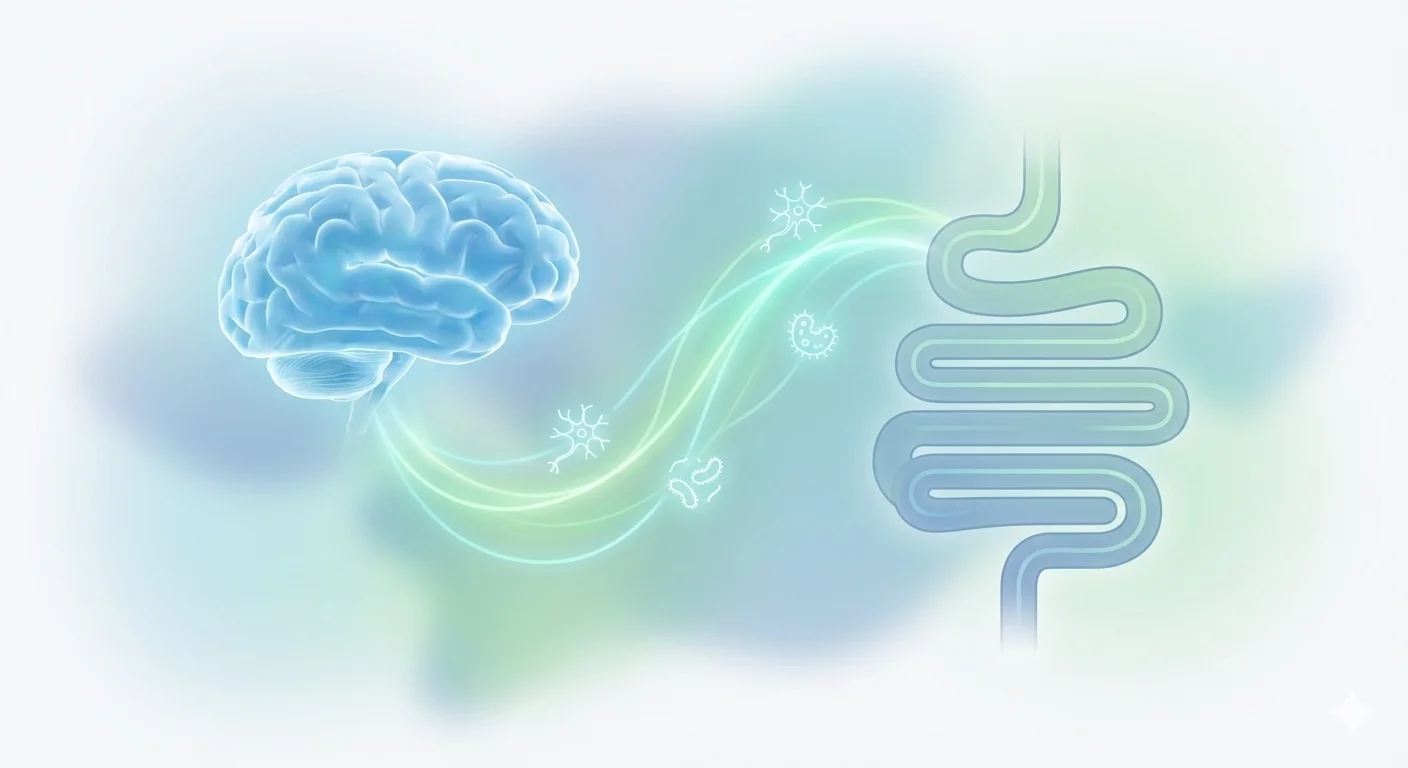
The gut and brain are in constant conversation through multiple pathways, including the vagus nerve, the microbiome, the immune system and the endocrine system.
The Vagus Nerve
The vagus nerve is a major highway between the gut and brain, transmitting signals in both directions. Approximately 80-90% of vagal fibers carry information from the gut to the brain, meaning your gut is “talking” to your brain more than the other way around.
The Microbiome
Your gut houses trillions of bacteria, viruses and fungi collectively known as the microbiome. These organisms produce neurotransmitters including serotonin, dopamine and GABA. They manufacture vitamins and other compounds, influence inflammation throughout the body, interact with the immune system and generate metabolites that affect brain function.
The Immune System
Approximately 70% of your immune system resides in your gut1. Gut bacteria “train” immune cells and influence inflammatory signaling, and inflammation is increasingly recognized as a factor in depression and other mental health conditions.
The Endocrine System
Gut bacteria influence hormone production and metabolism, including stress hormones like cortisol. The gut also produces hormones that affect appetite, satiety and metabolism.
Serotonin: A Surprising Gut Story
Here’s a striking fact: approximately 95% of your body’s serotonin is produced in the gut, not the brain2.
Serotonin is famous as a “happy chemical” and is what SSRI antidepressants work to increase. Yet the vast majority is made by specialized cells in your digestive tract called enterochromaffin cells.
While gut serotonin doesn’t directly enter the brain because it can’t cross the blood-brain barrier, it regulates gut motility and function, influences the gut-brain signaling and may affect brain serotonin production indirectly.
This helps explain why digestive symptoms are so common in people with mood disorders and why improving gut health sometimes improves mood.
The Microbiome and Mental Health
Research has found disrupted gut bacterial patterns in people with various mental health conditions.
Depression
Multiple studies show that people with depression have different gut bacteria compositions than those without3. Certain bacterial species that produce anti-inflammatory compounds tend to be reduced.
Anxiety
Animal studies demonstrate that altering gut bacteria changes anxiety-related behaviors. Human studies show correlations between gut microbiome composition and anxiety symptoms4.
Stress Response
The gut microbiome appears to influence HPA axis function, which is your stress response system. Animal studies show that germ-free mice raised without gut bacteria have exaggerated stress responses.
Cognitive Function
Emerging research suggests gut bacteria may influence cognitive function, with potential implications for conditions like Parkinson’s disease. Interestingly, gut problems like constipation often precede Parkinson’s symptoms by years or decades5.
The Bidirectional Relationship
It’s important to understand that the gut-brain connection works both ways.
When signals travel from gut to brain, gut bacteria produce neurotransmitters and metabolites, gut inflammation can trigger brain inflammation and vagal nerve signals influence mood and cognition.
When signals travel from brain to gut, psychological stress alters gut motility and secretion, stress hormones change the gut environment, emotional states affect which foods we crave and stress can alter microbiome composition directly.
This bidirectionality means that gut problems can cause or worsen mental health symptoms, mental health problems can cause or worsen gut symptoms and addressing one often helps the other.
Practical Implications: Supporting the Gut-Brain Axis
While the research is still evolving, several evidence-based strategies support gut-brain health.
Diet
Diet is the primary modulator of gut bacteria composition.
Several types of foods are beneficial for gut-brain health. Fiber-rich foods like vegetables, fruits, whole grains and legumes feed beneficial bacteria. Fermented foods such as yogurt, kefir, sauerkraut and kimchi provide beneficial bacteria directly. Omega-3 fatty acids found in fatty fish may reduce inflammation and support the microbiome. Polyphenol-rich foods including colorful fruits and vegetables, tea and coffee support bacterial diversity.
On the other hand, certain dietary patterns can be harmful. Highly processed foods may promote inflammatory gut bacteria. Excessive sugar can feed less beneficial bacterial species. Artificial sweeteners may disrupt microbiome composition. Low fiber intake starves beneficial bacteria.
A Harvard study found that high-fiber diets and fermented food consumption were associated with improved microbiome diversity and reduced inflammation6.
Probiotics
Probiotics are live beneficial bacteria that have been studied for mental health effects. The term “psychobiotics” has emerged to describe probiotics with mental health benefits.
Research shows that certain Lactobacillus and Bifidobacterium strains may improve mood and anxiety, though effects tend to be modest and strain-specific. Quality and viability of probiotic products varies widely.
Probiotics show the most promise as part of a comprehensive approach rather than a standalone treatment for mental health conditions.
Stress Management
Given the bidirectional relationship, stress management supports gut health just as gut support aids stress resilience. Chronic stress disrupts gut barrier function, sometimes called “leaky gut.” Stress also alters gut bacteria composition. Mind-body practices like meditation may benefit gut health, and adequate sleep supports a healthy microbiome.
Addressing Gut Dysfunction
For many people, improving mental wellbeing requires addressing underlying gut issues. Food sensitivities and undiagnosed reactions can cause systemic inflammation. SIBO, or Small Intestinal Bacterial Overgrowth, is common and often overlooked. Dysbiosis refers to imbalanced gut bacteria. Gut infections including parasites or pathogenic bacteria can also play a role. Intestinal permeability, sometimes called “leaky gut,” allows inflammatory compounds into circulation.
Comprehensive stool testing can help identify these issues.
What This Doesn’t Mean
While the gut-brain research is exciting, some important caveats apply.
Regarding correlation versus causation, we don’t yet know whether gut changes cause mental health conditions or result from them or both. The relationship is complex.
It’s also important to understand that gut interventions are not a replacement for mental health treatment. They complement but don’t replace therapy, medication or other evidence-based mental health treatments.
Individual variation matters as well. What works for one person’s microbiome may not work for another. Personalized approaches are often necessary.
Finally, this is an evolving science. This field is developing rapidly. What we “know” today may be refined or revised as research continues.
The Integrative Approach
The gut-brain connection highlights why treating the whole person matters. Mental health isn’t just “in your head” but is influenced by diet, gut health, inflammation, hormones and more.
An integrative approach might include dietary optimization for gut-brain health, addressing identified gut dysfunction, stress management and nervous system support, appropriate supplementation such as probiotics and omega-3s, conventional mental health treatment as indicated and lifestyle factors including sleep, exercise and social connection.
Gut-Brain Support in Halifax
If you’re experiencing digestive symptoms alongside mood concerns, or if you’re interested in optimizing your gut health for overall wellbeing, please contact Dr. Colin MacLeod, ND to book an initial visit.
Dr. MacLeod offers comprehensive digestive health assessment including stool testing and can help develop a personalized plan addressing both gut function and its effects on whole-body health.
References
- Vighi G, Marcucci F, Sensi L, Di Cara G, Frati F. Allergy and the gastrointestinal system. Clin Exp Immunol. 2008;153 Suppl 1:3-6.
- Yano JM, Yu K, Donaldson GP, et al. Indigenous bacteria from the gut microbiota regulate host serotonin biosynthesis. Cell. 2015;161(2):264-276.
- Valles-Colomer M, Falony G, Darzi Y, et al. The neuroactive potential of the human gut microbiota in quality of life and depression. Nat Microbiol. 2019;4(4):623-632.
- Simpson CA, Diaz-Arteche C, Eliby D, et al. The gut microbiota in anxiety and depression: A systematic review. Clin Psychol Rev. 2021;83:101943.
- Fitzgerald E, Murphy S, Martinson HA. Alpha-Synuclein Pathology and the Role of the Microbiota in Parkinson’s Disease. Front Neurosci. 2019;13:369.
- Wastyk HC, Fragiadakis GK, Perelman D, et al. Gut-microbiota-targeted diets modulate human immune status. Cell. 2021;184(16):4137-4153.
- Cryan JF, O’Riordan KJ, Cowan CSM, et al. The Microbiota-Gut-Brain Axis. Physiol Rev. 2019;99(4):1877-2013.