Peptide Evidence, Safety and Regulation in Canada
Peptides in Canada: approved medicines, research chemicals, marketing and safety.

On This Page
Peptides have moved from a specialized area of pharmaceutical research into mainstream health marketing. They are promoted online for injury recovery, fat loss, muscle gain, anti-aging, sleep, libido, tanning, immune function and general optimization. Peptides are real biological signalling molecules, and several peptide-based medicines have changed modern medicine. Insulin, glucagon-like peptide-1 (GLP-1) receptor agonists, desmopressin, oxytocin, gonadotropin-releasing hormone analogues and many other approved medicines are peptide or peptide-related therapies with legitimate uses.
The problem is that the word “peptide” now covers very different things: approved prescription medicines, investigational compounds, compounded preparations, cosmetic ingredients, oral collagen products and unapproved injectable products sold online as research chemicals. These categories are often blurred in social media, podcast and YouTube video presentations. Health Canada has warned Canadians not to buy or inject unauthorized peptide medicines sold online, noting that many are marketed for anti-aging, bodybuilding, wellness, athletic performance, weight loss and injury recovery despite not being assessed for safety, effectiveness or quality.1
Key Distinction
Not all peptides are the same
What Are Peptides?
Peptides are short chains of amino acids. Proteins are also made of amino acids, but peptides are smaller. In the body, peptides often act as hormones, neurotransmitters, growth factors or signalling molecules. Because they can interact with specific receptors, they can have strong biological effects even at low doses.
This biological specificity is one reason peptide medicines are attractive to researchers. Compared with many small-molecule medicines, peptides can be highly selective. Compared with large biologic medicines such as monoclonal antibodies, they are often smaller and sometimes easier to synthesize or modify. Modern medicinal chemistry can extend peptide half-life, improve receptor selectivity, reduce degradation and change how a peptide is delivered.2
However, the same biological activity that makes peptides interesting also creates risk. A peptide that affects growth hormone, insulin, melanocortin receptors, immune signalling, blood vessels or tissue repair is not a simple supplement. It can change physiology. If the dose, purity, route of administration or patient selection is wrong, the risk profile changes.
Approved Peptide Medicines Are Different From Online Peptides
It is important not to dismiss peptide medicine as a whole. Approved peptide medicines are a major part of modern care. GLP-1 receptor agonists such as semaglutide and tirzepatide-related therapies have strong evidence for diabetes and weight management when used appropriately. Desmopressin is used for specific endocrine and bleeding disorders. Gonadotropin-releasing hormone analogues are used in fertility care, endometriosis, prostate cancer and other conditions. Tesamorelin is an approved growth-hormone-releasing hormone analogue in some jurisdictions for HIV-associated lipodystrophy.
These medicines have gone through regulatory review. Their manufacturing, dosing, labelling, storage, contraindications and adverse effects are defined. They are not risk-free, but they exist inside a system built to evaluate and monitor risk.
The peptide products most commonly promoted in the wellness, performance and anti-aging space are often different. Examples include BPC-157, TB-500, CJC-1295, ipamorelin, GHK-Cu injections, MOTS-c, AOD-9604, melanotan II, epitalon, thymosin alpha-1 and others. Some have interesting preclinical or early-stage data. Some have plausible mechanisms. Some may eventually become useful medicines. But many have little or no high-quality human evidence for the claims being made online. That does not mean every claim is impossible. It means the level of certainty is often much lower than the marketing suggests.
Canadian Peptide Regulation
In April 2026, Health Canada issued a public advisory warning people not to buy or use unauthorized injectable peptide medicines sold online. The advisory listed examples of seized products, including BPC-157, CJC-1295, DSIP, epitalon, GHK-Cu, HCG, ipamorelin, KPV, melanotan I and II, MOTS-c, NAD+, SS-31, TB-500 and retatrutide.1
Health Canada stated that peptides are generally regulated as prescription medicines in Canada, and that authorized medicines for sale in Canada have an eight-digit Drug Identification Number (DIN). Products labelled “For Research Use Only” are not made legal for human use by that label. Health Canada’s concern is not only whether the peptide itself might work; it is also whether the product has been assessed for safety, efficacy and quality.
Health Canada has also addressed GLP-1 compounding specifically. In a June 2025 position document, the regulator noted the rise of unauthorized and counterfeit semaglutide products and stated that sterile compounding is a high-risk activity that should generally be reserved for exceptional circumstances, such as a patient-specific need that cannot be met by an approved drug or a true shortage. Health Canada also expressed concern about compounded GLP-1 products mixed with other active ingredients without scientific justification.3 In April 2026, Health Canada authorized a generic semaglutide injection, which is a useful reminder that an approved synthetic peptide medicine is very different from an unauthorized compounded or online product.4 A peptide being “available” online does not mean it is authorized, legal for sale, sterile, accurately dosed or appropriate for human use.
Evidence: Where Peptide Claims Are Strong, Weak or Unknown
Evidence Ladder
How much confidence should a claim get?
Approved peptide medicines: This is the strongest category. These medicines have defined indications, regulatory review and clinical trial data. GLP-1 receptor agonists are the obvious current example. Their benefits and risks are still individualized, but the evidence base is much stronger than for most wellness peptides.
Investigational peptides: Some peptides have promising mechanisms or early studies but are not approved for routine clinical use. They may be appropriate inside properly designed clinical trials. Outside that context, uncertainty is higher.
Performance and recovery peptides: BPC-157 and TB-500 are commonly discussed for tendon, ligament, gut and injury healing. BPC-157 has a large amount of animal and laboratory research, but there is a major gap between animal data and reliable human clinical evidence. As of this writing, there is no robust body of published, large, randomized human trials showing that BPC-157 safely and effectively treats common sports injuries in people. That gap should matter when claims are presented as established fact.
Growth hormone secretagogues: CJC-1295, ipamorelin, GHRP-2, GHRP-6, hexarelin and related compounds are promoted for body composition, recovery, sleep and anti-aging. Their mechanisms are plausible because they can influence growth hormone and insulin-like growth factor-1 signalling. But changing this axis can also create side effects, including fluid retention, changes in glucose regulation, carpal tunnel-like symptoms, headaches and theoretical concerns in people with cancer risk or proliferative disease. Long-term safety for broad wellness use is not well established.
Melanotan products: Melanotan II is promoted for tanning and libido. It has been associated with nausea, flushing, changes in moles, priapism and case reports of more serious events, including renal infarction.5 It is a good example of how a product marketed as cosmetic or lifestyle-oriented can still have systemic medicine effects.
Why Online Peptide Products Are Riskier Than They Look
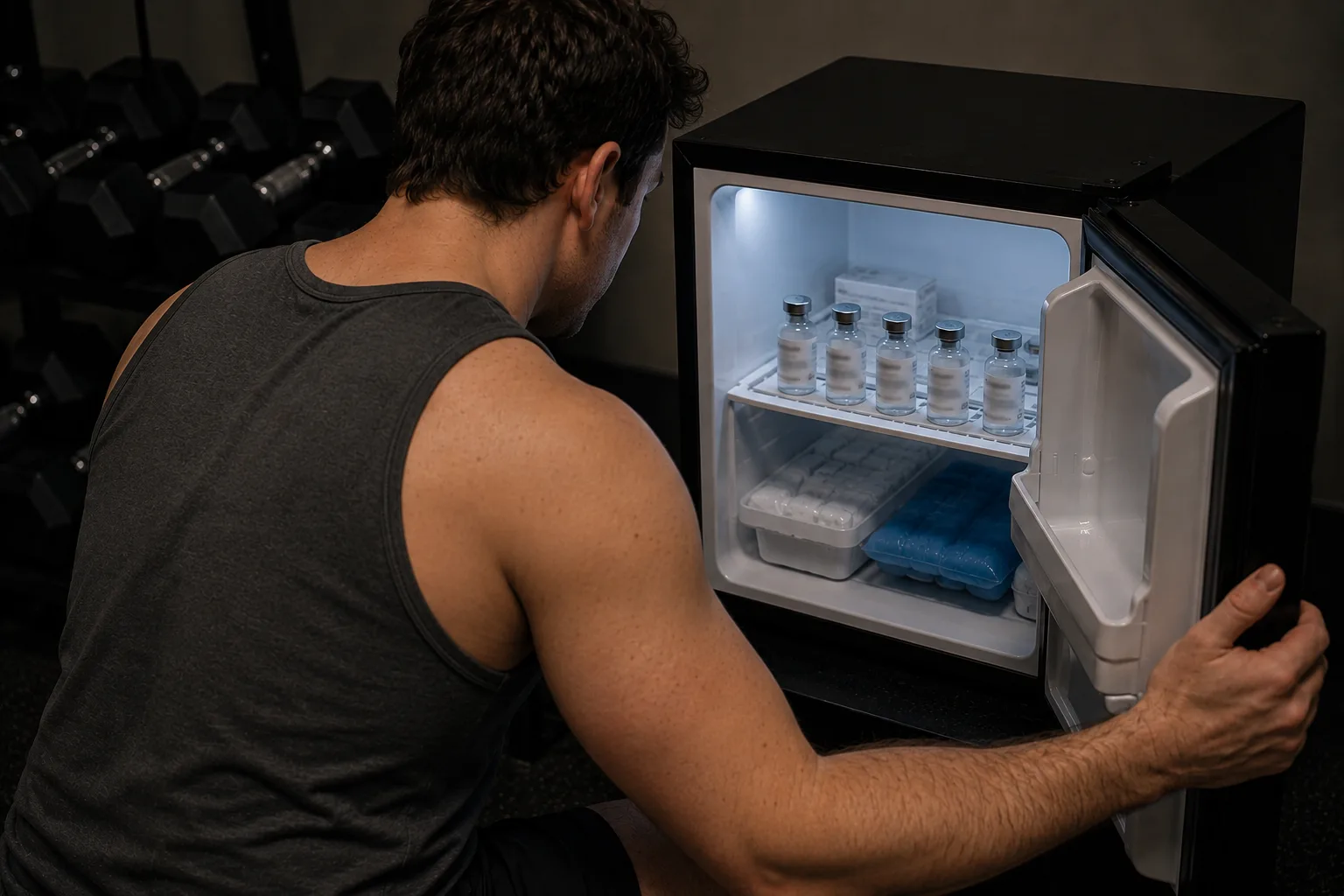
Many peptide products are injected subcutaneously. Injection changes the risk profile. A contaminated oral supplement is concerning; a contaminated injectable is more concerning because it bypasses several normal barriers. Sterility, endotoxin control, particulate contamination, solvent residues, accurate concentration and cold-chain storage all matter.
Health Canada specifically warned that unauthorized peptide products may contain too much, too little or none of the active ingredient. They also may contain unlisted or dangerous ingredients, such as solvents, heavy metals, glass, plastic, fibers, bacteria, fungi or endotoxins. They also may be poorly labelled, improperly manufactured or improperly stored.1
Health Canada Warning Summary
Potential quality concerns
This is one of the central problems with the research chemical market. A certificate of analysis posted by a vendor is not the same thing as independent pharmaceutical quality assurance. It may not apply to the actual vial received. It may not include sterility or endotoxin testing. It may not detect all impurities. It may also be fabricated or selectively presented. For an injectable medicine, quality control is not a minor detail.
Development, Patents and Why Evidence Can Lag Behind Demand
Peptide development is expensive and technically demanding. A compound may have promising animal data, plausible biology or significant consumer interest long before there are large human trials. Some useful therapies may be under-studied because they are difficult to commercialize, while others remain unapproved because early promise did not translate into meaningful human benefit or because safety questions remain. The honest position is usually uncertainty, not certainty in either direction.
Sales, Marketing and the Influencer Problem
Peptide marketing often uses a familiar pattern: a complex molecule is given a simple story. BPC-157 becomes a “healing peptide.” CJC-1295 and ipamorelin become a “growth hormone optimization stack.” MOTS-c becomes a “mitochondrial peptide.” Melanotan becomes a “tanning peptide.”
Influencers often emphasize personal experience, before-and-after photos and claims of insider knowledge. The bodybuilding and performance-enhancement communities have also accelerated peptide use because those spaces are already accustomed to self-experimentation, injections, off-label medicine use and underground sourcing. Some users are highly informed about pharmacology and risk. Others are following protocols copied from forums, podcasts or videos.
Anecdotes are not worthless. They can generate hypotheses and point to areas worth studying. But anecdotes are vulnerable to placebo effects, regression to the mean, concurrent treatments, training changes, diet changes, natural healing, selective reporting and financial incentives.
Bodybuilding, Sport and Anti-Doping
Peptides are prominent in bodybuilding because many are marketed for muscle gain, fat loss, recovery, appetite control or injury repair. Competitive athletes have another issue: anti-doping rules.
The World Anti-Doping Agency’s 2026 Prohibited List includes multiple peptide-related categories. Growth hormone, growth hormone fragments, growth-hormone-releasing hormone analogues such as CJC-1295 and sermorelin, growth hormone secretagogues such as ipamorelin and ibutamoren, and GH-releasing peptides such as GHRP-2 and GHRP-6 are prohibited at all times.6 The list also includes other growth factors and hormone-modulating substances. Athletes subject to anti-doping rules should not assume that a clinic, supplement store, online vendor or influencer has checked the current prohibited list.
Anti-Doping Snapshot
Peptide-related categories named by WADA
For recreational bodybuilders, the issue is less about sanctions and more about risk normalization. Communities that are comfortable with anabolic steroids, growth hormone, insulin or research chemicals may understate the medical uncertainty of peptides. The fact that a compound is commonly used in a community does not establish safety.
Common Claims and a Balanced Interpretation
“Peptides are natural.” Some peptides are based on natural signalling molecules, but many marketed peptides are synthetic analogues, fragments or modified compounds.
“Peptides are safer than steroids.” Some may have lower androgenic risks than anabolic steroids, but that does not make them low-risk. They may affect growth hormone, glucose metabolism, pigmentation, immune signalling, fertility hormones or other systems.
“My clinic compounds it, so it must be approved.” Compounding can be legitimate when used for patient-specific needs within regulatory standards. It is not a shortcut around medicine approval. Health Canada has been explicit that compounding should not be used to bypass the federal drug review and approval system.3
“It says research use only.” Health Canada has specifically stated that this label does not make an unauthorized peptide product legal or exempt from regulatory requirements for human use.1
“There are lots of animal studies.” Animal studies are useful for mechanism and early safety signals, but they do not prove that a treatment works in humans. Dose, metabolism, disease model and outcome measures may not translate.
Bottom Line
Peptides are a legitimate and important area of medicine. Some peptide medicines are evidence-based, regulated and clinically valuable. At the same time, many peptides promoted for anti-aging, performance, bodybuilding, injury recovery and wellness are being sold far ahead of the human evidence, often through channels that raise serious quality concerns.
For Canadians, the most cautious interpretation is also the most accurate: approved peptide medicines should be considered like other prescription medicines, with clear indications and professional oversight. Unauthorized injectable peptides sold online should be avoided.
The most useful conversation is not whether peptides are good or bad. It is whether a specific peptide, from a specific source, for a specific person and a specific goal, has enough evidence and quality control to justify the risk.
References
- Health Canada. Think twice before injecting peptides bought online: unauthorized products can seriously harm you. Public advisory. April 9, 2026.
- Muttenthaler M, King GF, Adams DJ, Alewood PF. Trends in peptide drug discovery. Nature Reviews Drug Discovery. 2021;20:309-325.
- Health Canada. Health Canada’s position on the unauthorized manufacturing of products sold as compounded glucagon like peptide 1 (GLP-1) receptor agonists. June 2, 2025.
- Health Canada. Canada becomes the first G7 country to approve a generic version of semaglutide. News release. April 28, 2026.
- Peters B, Hadimeri H, Wahlberg R, Afghahi H. Melanotan II: a possible cause of renal infarction: review of the literature and case report. CEN Case Reports. 2020;9(2):159-161.
- World Anti-Doping Agency. The 2026 Prohibited List: International Standard. In force January 1, 2026.
- Lau JL, Dunn MK. Therapeutic peptides: historical perspectives, current development trends, and future directions. Bioorganic & Medicinal Chemistry. 2018;26(10):2700-2707.
- Drucker DJ. Mechanisms of action and therapeutic application of glucagon-like peptide-1. Cell Metabolism. 2018;27(4):740-756.
- Wilding JPH, Batterham RL, Calanna S, et al. Once-weekly semaglutide in adults with overweight or obesity. New England Journal of Medicine. 2021;384:989-1002.
- Jastreboff AM, Aronne LJ, Ahmad NN, et al. Tirzepatide once weekly for the treatment of obesity. New England Journal of Medicine. 2022;387:205-216.
- Teichman SL, Neale A, Lawrence B, et al. Prolonged stimulation of growth hormone and insulin-like growth factor I secretion by CJC-1295, a long-acting analog of growth hormone-releasing hormone, in healthy adults. Journal of Clinical Endocrinology & Metabolism. 2006;91(3):799-805.
- Raun K, Hansen BS, Johansen NL, et al. Ipamorelin, the first selective growth hormone secretagogue. European Journal of Endocrinology. 1998;139(5):552-561.
- U.S. Food and Drug Administration. Certain Bulk Drug Substances for Use in Compounding that May Present Significant Safety Risks. Updated 2026.