
Fatigue, cognitive difficulty, sleep disturbance, shortness of breath, palpitations and reduced tolerance for activity can persist after an acute viral infection. These symptoms are sometimes described as a post-viral condition; following COVID-19, they may fall within the broad clinical picture of Long COVID.1
Persistent symptoms do not identify a single cause or treatment. Recovery varies substantially, and new, severe or worsening symptoms require appropriate medical assessment. IV nutrient therapy is sometimes marketed for post-viral recovery, but current evidence does not establish it as a treatment for Long COVID or post-viral syndromes.
Assessment Before Treatment
Post-viral symptoms can overlap with anemia, thyroid disorders, sleep disorders, medication effects, autonomic dysfunction, cardiac or respiratory disease, nutritional deficiency and other conditions. Assessment may include a medical history, physical examination and selected testing based on the symptoms and previous findings.
Chest pain, significant breathing difficulty, fainting, new neurological symptoms or rapidly worsening function require prompt medical care. Website information cannot diagnose the reason for persistent symptoms or determine whether IV treatment is appropriate.
What IV Delivery Can Establish
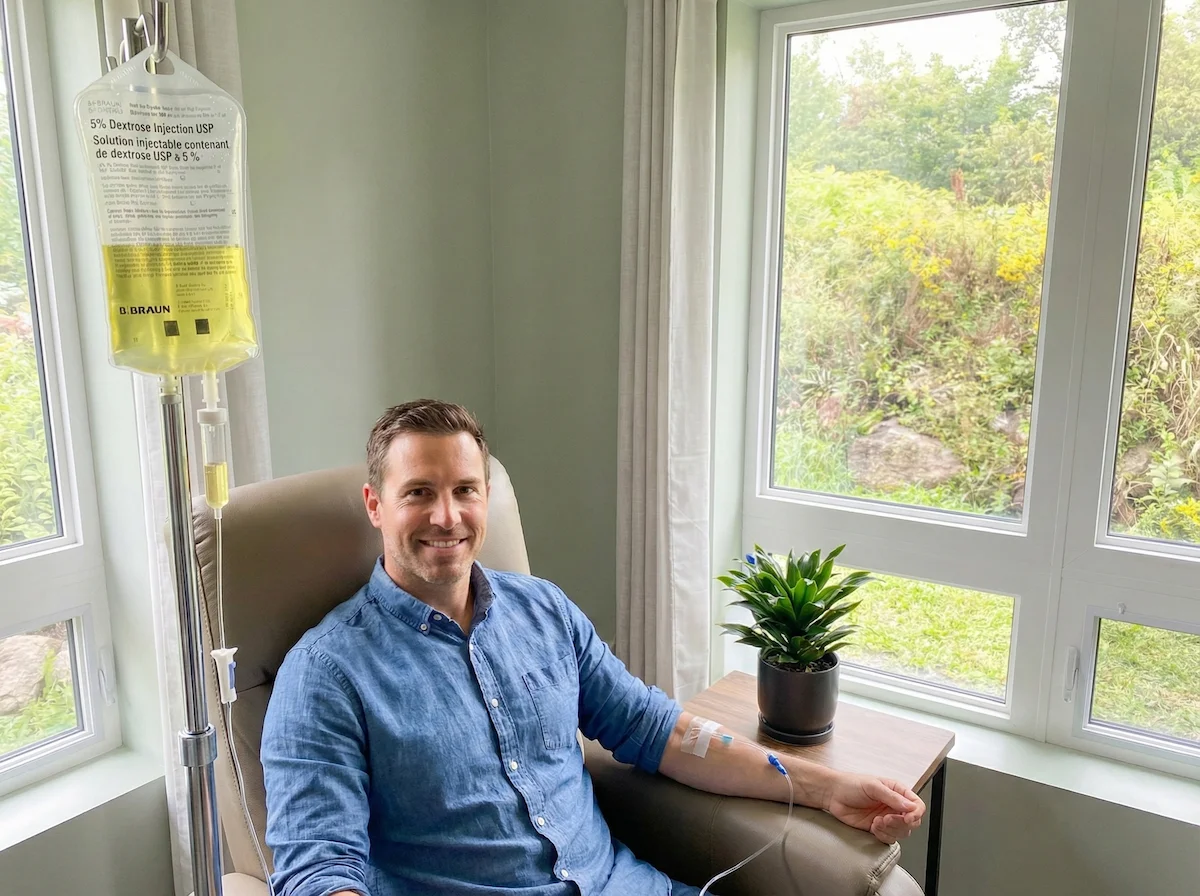
An intravenous infusion delivers its ingredients directly into the bloodstream and avoids gastrointestinal absorption. This can produce higher circulating concentrations than oral administration for some nutrients.2 Pharmacokinetics, however, do not prove that an infusion improves a particular symptom, shortens recovery or treats the underlying condition.
The Myers’ Cocktail generally contains magnesium, B vitamins, vitamin C and calcium, although formulations vary. Published evidence is limited, and studies in other conditions cannot be assumed to demonstrate benefit for post-viral illness.3,4
High-dose IV vitamin C has also been investigated in several clinical settings, but those findings do not establish routine benefit for post-viral fatigue or Long COVID. Different doses and formulations carry different risks and require indication-specific screening.
Potential Risks and Burden
IV treatment can cause pain, bruising, infection or inflammation at the insertion site, as well as light-headedness, changes in blood pressure, fluid or electrolyte problems and reactions to an ingredient. Additional risks depend on the formulation and on factors such as kidney function, cardiac status, medications and G6PD status.
Cost, travel, time and the possibility of repeated procedures are also part of informed decision-making. A proposed treatment should have a clear rationale, realistic goals and a plan to stop or reconsider if measurable benefit is not occurring.
Broader Post-Viral Care
Management depends on the symptom pattern and diagnosis. Depending on the person, established care may involve medical investigation, rehabilitation, management of sleep or autonomic symptoms, dietary assessment, treatment of a confirmed deficiency and careful activity planning. Some people experience post-exertional symptom exacerbation, in which case generic advice to steadily increase exercise may be inappropriate.5
Nutritional adequacy matters during recovery, but symptoms alone do not demonstrate a vitamin or mineral deficiency. Food, oral supplements and IV administration have different roles; the least invasive reasonable option should be considered first.
A Cautious Conclusion
IV nutrient therapy should not be advertised as restoring depleted stores, accelerating post-viral recovery or producing predictable improvements in energy. If it is considered, the discussion should cover the limited evidence, uncertainty, risks, alternatives and cost. There is no standard website-based dose, formulation or treatment schedule for post-viral symptoms.
An initial consultation can review the history, previous results and whether additional assessment is appropriate. That assessment may lead to conventional medical follow-up or another form of care rather than IV treatment.
References
- Davis HE, McCorkell L, Vogel JM, Topol EJ. Long COVID: major findings, mechanisms and recommendations. Nat Rev Microbiol. 2023;21(3):133-146.
- Padayatty SJ, Sun H, Wang Y, et al. Vitamin C pharmacokinetics: implications for oral and intravenous use. Ann Intern Med. 2004;140(7):533-537.
- Gaby AR. Intravenous nutrient therapy: the “Myers’ cocktail.” Altern Med Rev. 2002;7(5):389-403.
- Ali A, Njike VY, Northrup V, et al. Intravenous micronutrient therapy for fibromyalgia: a placebo-controlled pilot study. J Altern Complement Med. 2009;15(3):247-257.
- Bateman L, Bested AC, Bonilla HF, et al. Myalgic encephalomyelitis/chronic fatigue syndrome: essentials of diagnosis and management. Mayo Clin Proc. 2021;96(11):2861-2878.