E2
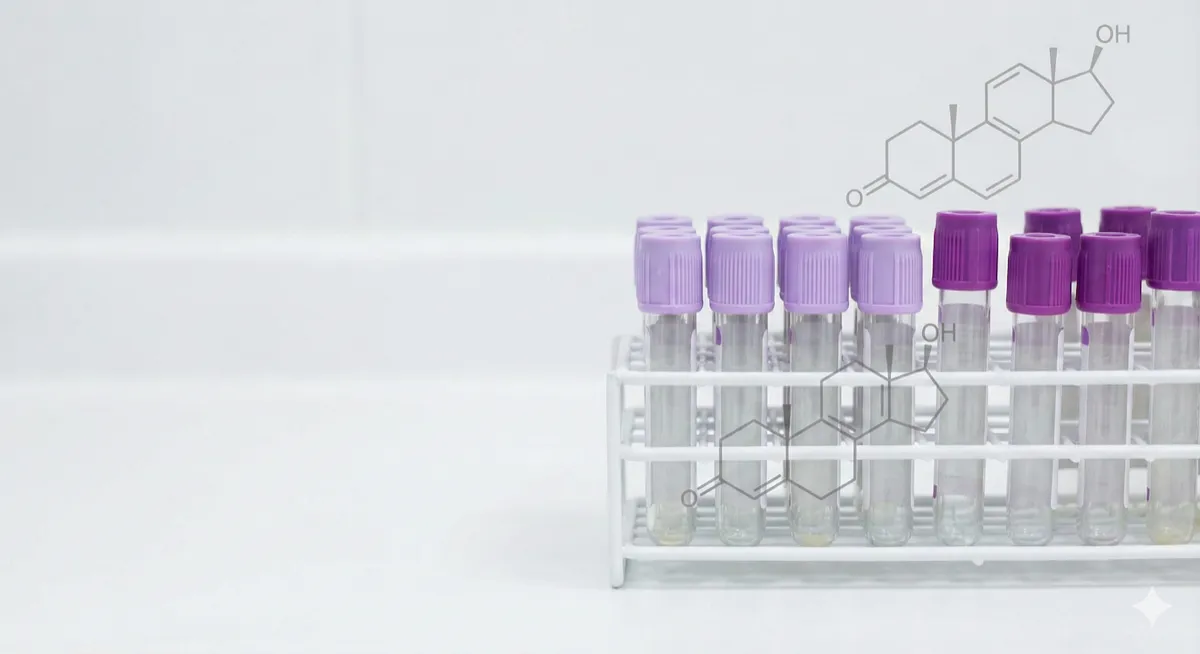
Estradiol
Estradiol is the principal circulating estrogen during the reproductive years. Its concentration varies across the menstrual cycle and changes substantially during the transition to menopause.
Hormone testing can help investigate menstrual changes, ovulation, androgen concerns and suspected hormone deficiency. Testing can be arranged without a family doctor requisition, with a blood-test panel tailored to your symptoms, history and priorities.
A personalized approach
Fatigue, mood changes, weight changes and low libido can have several possible causes. Dr. MacLeod reviews your symptoms, reproductive history, medications, previous results and testing goals before recommending a thorough hormone panel.
Your symptoms, menstrual or reproductive history, medications, previous results and the hormones you want assessed are reviewed together.
Dr. MacLeod recommends the blood tests and collection timing, then reviews any additional markers you would like considered.
Results are interpreted together and may require confirmation or additional assessment before a diagnosis can be made.
Common blood tests
Each hormone provides different information. Your panel can combine the markers most relevant to your needs, along with additional tests you want to discuss.
Estradiol is the principal circulating estrogen during the reproductive years. Its concentration varies across the menstrual cycle and changes substantially during the transition to menopause.
Progesterone rises after ovulation. A correctly timed serum measurement can provide evidence that ovulation recently occurred, but a single value cannot assess the overall quality of the luteal phase.
Total testosterone is usually the initial measurement. Sex hormone-binding globulin and calculated or measured free testosterone may add information when binding-protein changes affect interpretation.
Follicle-stimulating hormone and luteinizing hormone are produced by the pituitary gland. Their interpretation depends on sex hormones, menstrual status, age and symptoms.
Prolactin can be relevant to absent or irregular periods, infertility, unexpected breast milk production and some testosterone concerns. Stress, exercise and medications can affect the result.
DHEA-S is an androgen produced mainly by the adrenal glands. It may be included when assessing androgen excess or specific adrenal conditions, but it is not a general measure of vitality or biological ageing.
Collection and interpretation
Hormones vary with normal physiology. The date, time and circumstances of collection need to match the reason the test was ordered.
Estradiol, LH, FSH and progesterone change across the cycle. If progesterone is being used to assess recent ovulation, collection is generally timed about one week before the expected next period rather than assigned to cycle day 21 for everyone.
Testosterone in men is generally measured in the morning. A low result should be confirmed on a separate morning sample and interpreted together with compatible symptoms and signs.
Hormonal contraception, menopausal hormone therapy, testosterone, corticosteroids and several other medications can alter results. Acute illness, pregnancy and postpartum status also change interpretation.
Selecting tests
These are common reasons to consider hormone blood work. The scope can be focused or broad depending on your history, previous results and testing priorities.
Private testing in Nova Scotia
A family doctor or specialist referral is not required. Dr. MacLeod helps you build the panel, plan the timing and review costs before collection.
Your symptoms, reproductive history, medications, previous results and testing priorities are reviewed.
A private blood-test requisition is provided. Costs and timing instructions are confirmed in advance.
Results are reviewed with their limitations. Abnormal findings may require confirmation or referral for medical evaluation.
Laboratory testing ordered through a naturopathic doctor is not covered by MSI. Some extended health plans may cover naturopathic appointments, but laboratory coverage varies.
Continue exploring
Timing depends on which hormones are being measured. Progesterone is generally collected about one week before the expected next period when assessing whether ovulation recently occurred, rather than automatically on days 19–21. FSH, LH and estradiol may be collected at a different point in the cycle. Clear timing instructions are provided before testing.
Yes. I will recommend a panel based on your symptoms, health history, medications and previous results, and we can discuss any additional hormone tests you would like included. Collection timing is planned so the results are as informative as possible.
A diagnosis requires compatible symptoms or signs together with consistently low testosterone concentrations. Testing generally begins with a morning total testosterone measurement, and a low result is confirmed on a separate morning sample. Additional blood tests may be needed to investigate the cause.
No. You do not need a family doctor or specialist referral. I can provide a private laboratory requisition after reviewing your symptoms, health history and previous results. The cost of each test is discussed before anything is ordered.
Book an initial consultation to review your concerns, previous results and the hormone blood tests you would like to complete.
Book Online (opens Jane booking in a new tab)