
Wellness Blood Work

Wellness blood work provides selected baseline or follow-up information about blood cells, glucose regulation, lipids, kidney function and liver-associated markers. Testing can be arranged without a family doctor requisition and is tailored to your history and reason for testing.

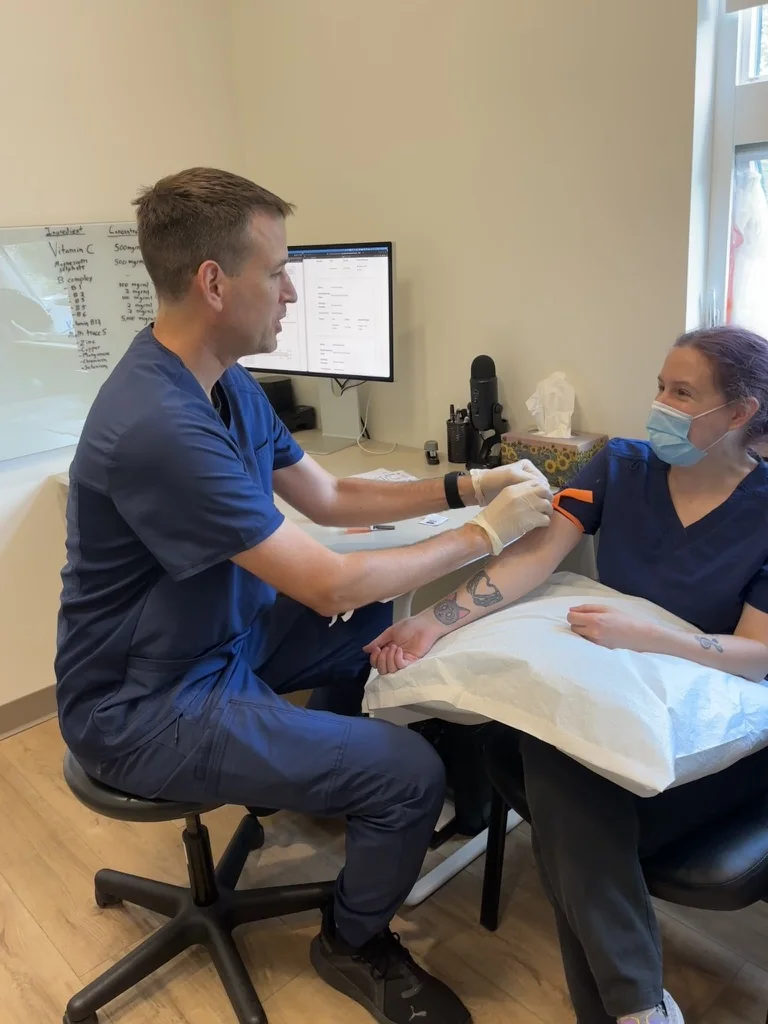
Dr. Colin MacLeod preparing a patient for in-office blood work

A personalized approach

Build a wellness panel around your needs

Wellness blood work can be focused or broad. Dr. MacLeod reviews your symptoms, health history, medications, previous results and testing priorities, then recommends a panel that reflects what you want to investigate and what may be useful to assess.

  1. 1

    Understand your priorities

    Current concerns, health history, medications, previous results and the areas you want investigated are reviewed together.

  2. 2

    Select the markers

    A core panel is combined with additional markers that reflect your health needs, preferences and previous testing.

  3. 3

    Review results and next steps

    Results are interpreted together. Follow-up may include monitoring, further assessment or coordination with primary or urgent medical care.

Common components

What wellness blood work may include

These groups describe commonly requested tests. Your requisition can include a broad baseline as well as additional markers selected for your health history, goals and preferences.

CBC

Complete blood count

Measures red blood cells, white blood cells and platelets. The individual values and cell indices can contribute to the assessment of anemia, infection and some blood disorders.

May include: Hemoglobin, hematocrit, MCV, white blood cell count and platelets

A1C

Blood glucose markers

Fasting glucose measures blood sugar at the time of collection. HbA1c estimates average blood glucose over approximately the previous two to three months.

May include: Fasting glucose and HbA1c, with additional markers based on your health history and goals

Lipid

Lipid profile

Measures cholesterol carried in different lipoproteins and triglycerides. Results are considered with blood pressure, smoking, diabetes, family history and other cardiovascular risk factors.

May include: Total cholesterol, LDL-C, HDL-C and triglycerides

Renal

Kidney function and electrolytes

Creatinine and estimated glomerular filtration rate provide information about kidney filtration. Electrolytes help assess fluid and mineral balance.

May include: Creatinine, eGFR, sodium and potassium

Liver

Liver-associated markers

Enzymes and related markers can change with liver or biliary conditions, medication use and other health factors. An abnormal result does not identify the cause by itself.

May include: ALT, AST, ALP, GGT, bilirubin and albumin, when appropriate

Other

Additional tests when indicated

Thyroid, iron, vitamin B12, inflammatory and other markers may be added when symptoms, history, medications or previous results provide a reason to include them.

May include: Selected individually rather than included automatically
Understanding the report

Results require context

A blood test is one part of an assessment. It can provide useful evidence, but it does not replace symptoms, history, physical examination or appropriate diagnostic follow-up.

Reference intervals

Results are compared with the reporting laboratory's intervals and decision thresholds. A value near a boundary is interpreted in context rather than labelled independently as healthy or unhealthy.

Trends over time

A previous result can help show whether a marker is stable, changing or returning toward baseline. Small differences can also reflect normal biological and laboratory variation.

Factors affecting results

Meals, hydration, exercise, acute illness, medications, supplements and the time of collection can affect particular measurements.

Significantly abnormal or time-sensitive findings may require prompt assessment through primary care, a walk-in clinic or emergency care. Private laboratory testing does not replace those services.

Reasons for assessment

When wellness blood work may be useful

Testing frequency and scope are individualized. These are common reasons to establish a baseline, update older results or take a broader look at your health.

  • No recent primary care or limited access to routine blood work
  • A previous result that requires reassessment or monitoring
  • Symptoms that warrant a broader clinical assessment
  • Medication use that requires laboratory monitoring
  • Personal or family risk factors for diabetes or cardiovascular disease
  • Establishing selected baseline values before a health intervention

Private testing in Nova Scotia

How the testing process works

A family doctor or specialist referral is not required. Dr. MacLeod helps you build the requisition, reviews costs and provides any preparation instructions before collection.

  1. 1

    Consultation and planning

    Your concerns, health history, previous results and the tests you want to discuss are reviewed.

  2. 2

    Requisition and collection

    A private laboratory requisition is provided. Costs and any fasting or timing instructions are confirmed in advance.

  3. 3

    Results and follow-up

    Results are reviewed as a group, with follow-up based on the findings and the reason the tests were ordered.

Laboratory testing ordered through a naturopathic doctor is not covered by MSI. Some extended health plans may cover naturopathic appointments, but laboratory coverage varies.

Frequently Asked Questions

Can I get blood work without a family doctor?

Yes. I can provide a private laboratory requisition after reviewing your health history, previous results and testing priorities. A family doctor or specialist referral is not required.

Is wellness blood work covered by MSI?

Laboratory testing ordered through a naturopathic doctor is not covered by MSI and is paid privately. The cost depends on the markers selected and is reviewed before testing.

Do I need a comprehensive panel?

Your panel can be focused or comprehensive. I will recommend tests based on your age, symptoms, health history, medications and previous results, and we can also discuss additional markers you would like included. Costs are reviewed before the requisition is completed.

Do I need to fast before blood work?

It depends on the tests selected. Some measurements are affected by recent food intake while others do not require fasting. You will receive specific instructions before collection. Unless instructed otherwise, water is permitted and medications should not be stopped.

How often should wellness blood work be repeated?

There is no single interval for everyone. Timing depends on age, risk factors, medications, previous findings and whether a result is being monitored after an intervention. We can establish a follow-up schedule that fits your results and health goals.

Can the results be shared with my family doctor?

Yes. You can receive a copy for your records or provide it to another healthcare professional. Findings that require medical diagnosis or treatment should be followed through the appropriate primary or specialist care pathway.

Plan Your Wellness Blood Work

Book an initial consultation to review your health history, previous results and the baseline or follow-up testing you would like to complete.

Book Online